

How to Relieve Neck Tension with Heat and EMS Therapy
Last Updated: October 25, 2026
Quick Summary
Heat and EMS therapy relieves neck tension by pairing two actions: heat relaxes surface muscle tissue and boosts blood flow, while EMS sends gentle pulses that trigger muscle contractions to reach deeper tension. Together they loosen tight tissue and re-engage the muscle layer underneath, making them a sensible first line of defense for everyday desk strain.
- Heat reduces muscle tone, increases blood flow, and relieves pain, according to a 2021 review.
- Most people feel a difference in a single 10 to 15 minute EMS session.
- Start EMS at the lowest intensity and raise it slowly, stopping if pain or burning occurs.
- Limit heat sessions to about 15 to 20 minutes at a comfortable, warm level.
- The NeuroRelief device offers 6 massage modes and 16 adjustable intensity levels with a 60-day guarantee.
Table of Contents
- What Heat and EMS Therapy Actually Do for Your Neck
- The Benefits of Heat and EMS Therapy for Desk-Bound Necks
- Is EMS Therapy Safe for Neck Use?
- How Long to Use EMS Therapy for Real Relief
- EMS vs TENS Therapy: What's the Difference?
- Heat Therapy Safety Precautions You Shouldn't Skip
- Build a Daily Neck Relief Routine with NeuroRelief
- Frequently Asked Questions
What Heat and EMS Therapy Actually Do for Your Neck
Most neck gadgets fail for one simple reason: they treat the surface and call it a day. Heat and EMS therapy works differently. Heat therapy is the use of controlled warmth to relax muscle tissue and boost blood flow, while EMS (electrical muscle stimulation) sends gentle pulses that trigger muscle contractions. At Get NeuroRelief, we built our whole approach around pairing the two, because the benefits of heat and EMS therapy come from what each one does that the other can't.
Here's the short version of how they work together.
How heat therapy works on tight muscles
Warmth does two things at once. It eases muscle tone and pulls more blood into the area. According to a 2021 review of superficial heat therapy, heat reduces muscle tone, increases blood flow, and relieves pain. A 2025 review found heat may help most with chronic musculoskeletal pain, low-back pain, and delayed-onset soreness.
Think of heat as the setup. It loosens the tissue so the deeper work can land.
How EMS reaches deeper tension
EMS does what your hands can't. Small electrical pulses make the muscle contract and release, which helps it respond to signals again. A 2026 explainer on electrical muscle stimulation notes EMS may help muscles respond to the signals that cause them to contract.
In plain terms: heat relaxes the surface, EMS wakes up the layer underneath.
The Benefits of Heat and EMS Therapy for Desk-Bound Necks
If you sit at a screen all day, your neck holds a low-grade clench for hours. That's the tension you feel by 3pm. The benefits of heat and EMS therapy for this kind of strain are practical, not dramatic:
- Faster relaxation: warmth eases tight tissue so you feel looser sooner
- Deeper reach: EMS works the muscle layer heat alone can't touch
- Better blood flow: heat supports circulation in a stiff area
- A repeatable routine: ten minutes, done, back to work
- No appointment needed: relief at your desk or on a plane
One honest caveat: the research doesn't prove heat or EMS fixes every condition. Results depend on your situation. For everyday desk tension, though, the combo is a sensible first line of defense.
Is EMS Therapy Safe for Neck Use?
EMS therapy is generally safe for neck use when you follow the device's instructions and keep intensity at a comfortable level. The neck is a sensitive area, so start low and build up.
A few ground rules we'd give anyone:
- Start at the lowest intensity and raise it slowly
- Stop if you feel sharp pain, burning, or tingling that doesn't fade
- Skip EMS if you have a pacemaker, are pregnant, or have a skin injury in the area
- Never place electrodes on the front of the throat
The question "is EMS therapy safe for neck" comes up constantly, and the honest answer is: safe for most healthy adults, with common sense. If you have a medical condition, check with your doctor first.
How Long to Use EMS Therapy for Real Relief
Most people feel a difference in a single 10 to 15 minute session. That's the realistic window, not an hour under a pad.
For daily use, keep sessions short:
- First week: one 10-minute session per day, low intensity
- Ongoing: one or two sessions daily as needed
- After a long flight or heavy desk day: one session to reset
Longer isn't better. Overdoing it can leave muscles sore. The point of knowing how long to use EMS therapy is consistency, not duration. A short daily habit beats a marathon session once a week.
Relieve Neck Tension In Minutes →
EMS vs TENS Therapy: What's the Difference?
EMS and TENS use the same kind of pulses but aim at different targets. EMS (electrical muscle stimulation) triggers muscle contractions to relax and re-engage tissue. TENS (transcutaneous electrical nerve stimulation) targets nerve signals to dull pain. Put simply: EMS works the muscle, TENS works the pain signal.
| Feature | EMS | TENS |
|---|---|---|
| Main target | Muscle contraction | Nerve pain signals |
| Best for | Tight, stiff muscles | Pain relief |
| Feel | Rhythmic muscle pulsing | Gentle tingling |
| Neck tension | Strong fit | Supportive, less direct |
For desk-bound neck tightness, EMS is the more direct tool. TENS can help with pain, but it won't loosen a clenched muscle the way EMS does. Many people use both, depending on the day.
Heat Therapy Safety Precautions You Shouldn't Skip
Heat is soothing, but heat therapy safety precautions matter, especially on the neck. The skin there is thin and easy to over-warm.
Follow these:
- Keep heat at a comfortable, warm level, never hot
- Limit sessions to about 15 to 20 minutes
- Check your skin for redness during use
- Don't use heat on numb skin or areas with poor circulation
- Never fall asleep with a heat device on
- Skip heat if the area is swollen, bruised, or inflamed
Watch out: the most common mistake is cranking the heat because "more must be better." It isn't. Warm and steady beats hot and risky every time.
Build a Daily Neck Relief Routine with NeuroRelief
A routine only works if it's easy enough to actually do. That's the whole idea behind the NeuroRelief Neck Therapy System. It's a cordless device that combines EMS massage with soothing heat, so you get both therapies in one session without cables or setup.
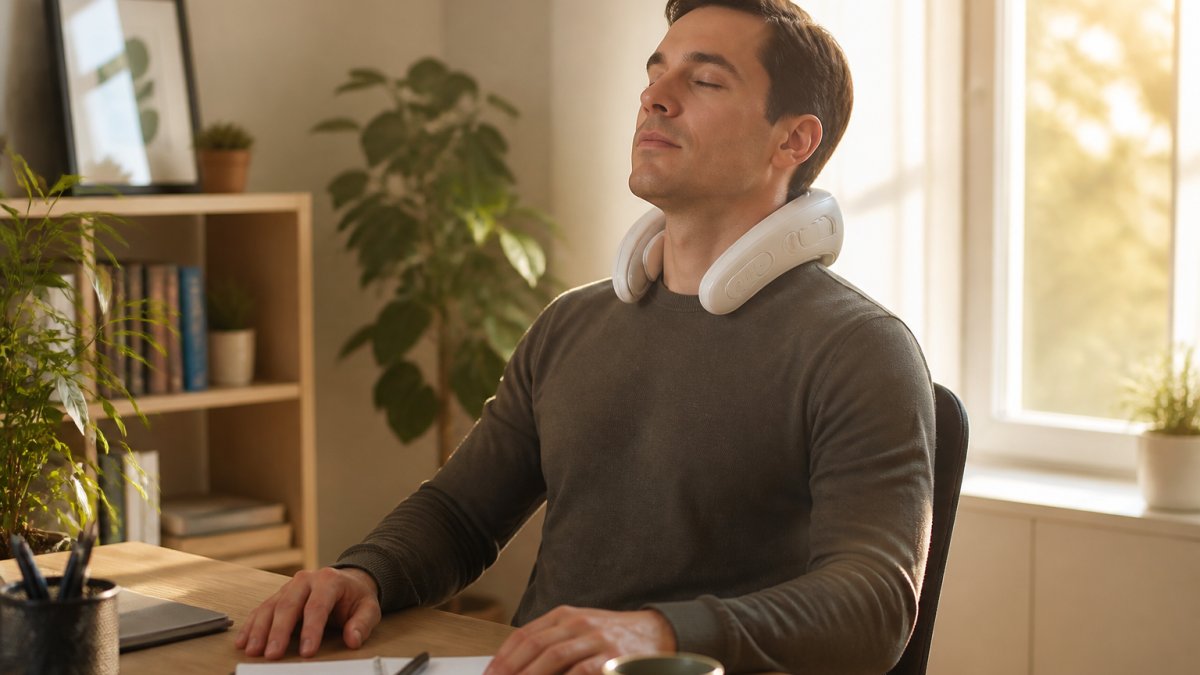
Here's a simple daily plan:
- Morning: 10 minutes at low intensity before your first meeting
- Midday: a short session if your neck tightens up
- Evening: one session to unwind after screen time
The device offers 6 massage modes and 16 adjustable intensity levels, so you can dial in what feels right and change it as your tension shifts. The cordless design means it travels with you, whether you're at a desk, on a plane, or in a hotel room.
If you've tried cheaper massagers that hurt or never reached the deep tension, the adjustable intensity is the difference. You control the depth instead of guessing. And with a 60-day guarantee, you can try the routine without risk.
You can relieve neck tension in minutes with a system built for daily use.

Frequently Asked Questions
What are the benefits of combining heat and EMS therapy?
Heat therapy warms tissue and increases blood flow, which helps muscles relax before stimulation. EMS then triggers gentle muscle contractions that reach tension heat alone can miss. A 2021 review found superficial heat reduces muscle tone and relieves pain, and 2025 reviews note it helps chronic musculoskeletal and low-back pain. Used together, the warmth prepares the muscle and the EMS works it, which is why a combined device like the NeuroRelief Neck Therapy System targets neck stiffness in one session.
Is EMS therapy safe to use on the neck?
EMS is generally safe on the neck when you follow the device's instructions and keep intensity comfortable. Start at the lowest level and increase gradually. Avoid placing electrodes over the front of the throat, over broken skin, or near a pacemaker. People who are pregnant, have a heart condition, epilepsy, or a implanted electronic device should check with a doctor first. The NeuroRelief system offers 16 adjustable intensity levels so you can stay within a range that feels soothing rather than sharp.
How long should you use heat and EMS therapy?
For daily neck tension, a single 15 to 20 minute session after work or between meetings is a practical starting point. Stop sooner if skin feels too hot or muscles start to ache rather than relax.
Is EMS therapy the same as TENS therapy?
No. EMS stimulates muscles to contract, which helps them relax and strengthen. TENS targets nerve endings to block pain signals and does not cause a visible contraction. If your goal is loosening tight neck muscles from desk work, EMS is the better fit. TENS suits nerve-related pain. Some devices offer both modes, but the NeuroRelief Neck Therapy System focuses on EMS massage combined with heat for muscle tension and stiffness.
Your neck carries a lot of load every day, and it deserves more than a quick rub. If you're tired of stretching and hoping the stiffness fades, a consistent routine with heat and EMS can change how your neck feels by the end of the week. Get NeuroRelief gives you the tools to make that routine simple: cordless design, soothing heat, EMS massage, and adjustable intensity for your comfort. Get started with Get NeuroRelief and build a daily habit that helps you relax and recover from stiff necks.
