

Is EMS Therapy Safe for Neck? A 2026 Guide
Table of Contents
- What Is EMS Therapy and How Does It Work on the Neck
- TENS vs EMS for Neck Pain: Key Differences and Safety
- Is EMS Therapy Safe for Neck Use
- Electrode Placement for Neck Pain and Areas to Avoid
- EMS Contraindications: Who Should Not Use Electrical Stimulation
- How Long to Use EMS Therapy for Neck Relief
- Potential Side Effects and When to Stop
- Frequently Asked Questions
Last Updated: October 11, 2026
What Is EMS Therapy and How Does It Work on the Neck
EMS therapy, or electrical muscle stimulation, sends mild electrical currents through electrodes placed on your skin to trigger muscle contractions, and is ems therapy safe for neck is a question many people ask before starting treatment. For neck pain and tension, this technology mimics the signals your nervous system naturally sends to muscles. The result is muscle activation without you having to move.
Daily activities like desk work, phone use, and travel create neck tension. EMS therapy targets this by stimulating muscles that support your cervical spine, promoting relaxation and recovery.
The NeuroRelief Neck Therapy System combines EMS with heat therapy: heat increases blood flow while electrical stimulation promotes muscle relaxation, delivering relief in minutes.

TENS vs EMS for Neck Pain: Key Differences and Safety
TENS and EMS are often confused because both use electrical currents, but they work differently. Understanding the distinction matters for neck safety.
TENS (transcutaneous electrical nerve stimulation) sends high-frequency, low-intensity pulses to block pain signals. EMS delivers lower-frequency, higher-intensity stimulation that contracts muscles, the difference between pain relief and muscle activation.
EMS addresses root causes like tight, fatigued muscles rather than masking pain, but requires careful placement on the sensitive neck. TENS is generally safer for direct neck application since it doesn't force muscle contractions.
| Aspect | TENS | EMS |
|---|---|---|
| Primary Function | Blocks pain signals | Activates muscles |
| Frequency | High (50+ Hz) | Low (2-50 Hz) |
| Intensity | Low | Higher |
| Neck Safety | Generally safer | Requires careful placement |
| Best For Neck | Pain relief | Muscle tension and recovery |
Is EMS Therapy Safe for Neck Use
Yes, EMS therapy is safe for neck use when applied correctly. The key is understanding where electrodes go and how intense the stimulation should be.
The neck contains sensitive structures: cervical spine, carotid arteries, and thyroid. Improper placement or excessive intensity could cause irritation, which is why devices like the NeuroRelief Neck Therapy System are designed with safety built in.

The device operates at controlled intensity with clear placement guidelines. You should feel mild muscle twitching or warmth, not pain or sharp sensations.
Start at lower intensity and increase gradually only if ineffective. Many users find relief at moderate levels without maximum power. Stop immediately if you experience tingling, numbness, or discomfort beyond mild muscle sensation.
Electrode Placement for Neck Pain and Areas to Avoid
Proper electrode placement is essential for safe, effective EMS therapy. The trapezius muscle and upper back are ideal targets, large muscles that support your neck and shoulders.
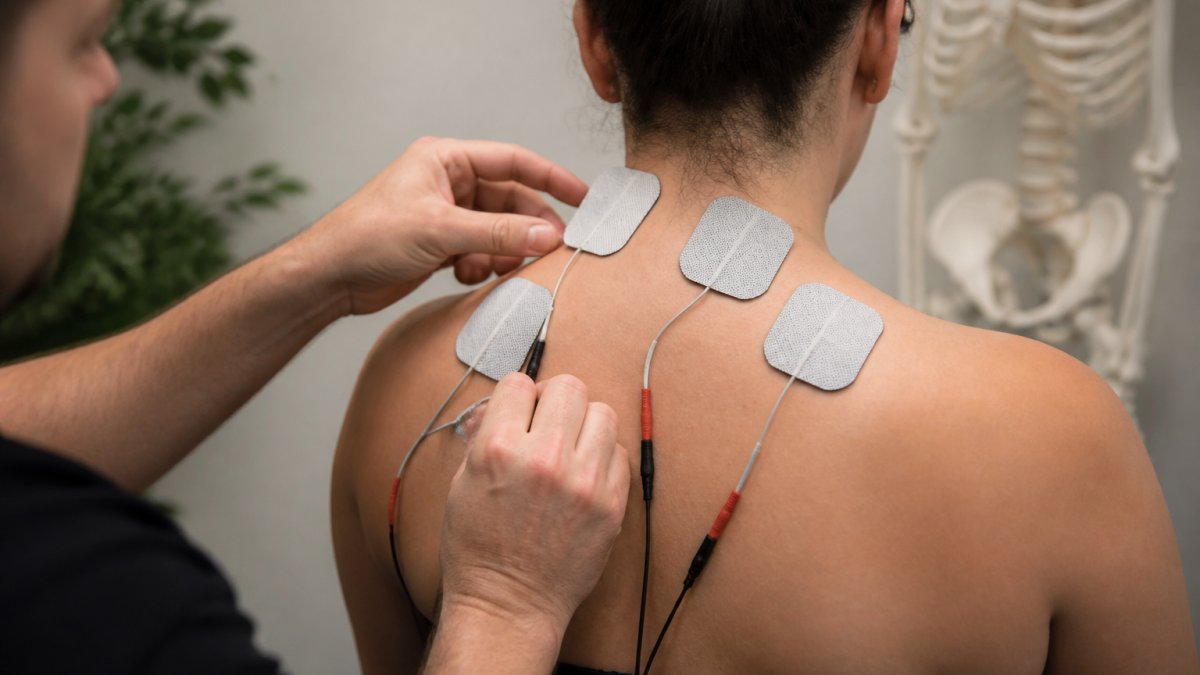
Place electrodes on the back and sides of your neck, focusing on the trapezius muscle belly. Position pads on muscle tissue, not bone or sensitive structures. Most devices include placement guides.
Avoid the front of your neck, spine, and throat. The carotid artery and thyroid are in this region and must never receive direct electrode contact. The spinal column is too delicate for direct stimulation.
Stay on visible muscle groups: trapezius, rear shoulders, and upper back are safe zones. Move electrodes immediately if placement causes discomfort or tingling in arms or hands.
EMS Contraindications: Who Should Not Use Electrical Stimulation
Certain people should avoid EMS therapy entirely, while others need medical clearance before starting. Understanding which category you fall into is essential for safe neck use.
Absolute Contraindications (Do Not Use)
If you have a pacemaker, ICD, or other implanted electrical device, avoid EMS. Electrical currents can interfere with device function, creating serious cardiac or neurological risks.
Pregnancy is an absolute contraindication. If you are pregnant, planning pregnancy, or breastfeeding, avoid EMS therapy and discuss neck pain management with your obstetrician.
Active infections, open wounds, or severe skin conditions (eczema, psoriasis, dermatitis) require you to wait. Resume use only after skin has fully healed.
Conditions Requiring Medical Clearance Before Use
Uncontrolled high blood pressure or heart arrhythmias require doctor approval. Electrical stimulation can temporarily affect heart rate and blood pressure.
A history of seizures requires medical clearance. Your neurologist or primary care provider can assess your individual risk.
Nerve damage, numbness, or loss of sensation in your neck means you cannot reliably feel if intensity is too high. Use only under professional supervision if cleared.
Uncontrolled diabetes with neuropathy in the neck or upper back requires endocrinologist consultation before use.
Risk Screening Checklist
Before starting EMS therapy on your neck, answer these questions:
Relieve Neck Tension In Minutes →
- Do you have any implanted electronic devices (pacemaker, ICD, spinal cord stimulator, insulin pump)?
- Are you pregnant, could be pregnant, or breastfeeding?
- Do you have active skin infections, open wounds, or severe dermatological conditions on your neck or upper back?
- Do you have uncontrolled high blood pressure, irregular heartbeat, or active heart disease?
- Do you have a history of seizures or epilepsy?
- Do you have numbness, tingling, or reduced sensation in your neck, shoulders, or arms at baseline?
- Do you have uncontrolled diabetes with nerve damage?
- Are you taking medications that affect sensation or muscle function (certain neurological drugs, muscle relaxants)?
If you answered "yes" to any of these, consult your healthcare provider before using EMS therapy.
How Long to Use EMS Therapy for Neck Relief
Session duration, frequency, and intensity progression all matter for safe, effective EMS use on the neck. Following a structured approach helps you achieve relief while minimizing overuse risk.
Starting Intensity and Session Duration
Most EMS devices operate on 15-minute sessions. This duration is long enough to deliver therapeutic benefit without overstimulating muscles.
Start at the lowest intensity setting. You should feel mild muscle twitching or gentle warmth, not pain or sharp sensations.
Gradually increase intensity only if lower settings feel ineffective after two to three sessions.
Frequency: Daily Use Versus Maintenance
Start with one 15-minute session per day for the first week. Most users notice noticeable relief in neck tension within three to five consecutive days of use.
After the first week, scale back to three to four sessions per week. This maintenance frequency sustains the benefits without overworking muscles.
Listen to your muscles. If your neck feels sore, fatigued, or stiff after a session, skip the next day. Muscles need recovery time just like they do after exercise.
When to Stop a Session Early: Stopping Criteria
Stop immediately and remove the electrodes if you experience any of the following during or after a session:
- Sharp or shooting pain in your neck, shoulders, or radiating down your arms. Mild muscle twitching is normal; sharp pain is not.
- Numbness or tingling that persists after the session ends or worsens during use. Brief tingling during stimulation is normal; persistent or worsening symptoms signal incorrect placement or excessive intensity.
- Dizziness, lightheadedness, or nausea during the session. These symptoms suggest the stimulation is affecting your cardiovascular system or balance.
- Unusual muscle contractions or involuntary movements that feel uncontrolled or painful.
- Skin reactions such as burning, blistering, or severe redness developing during the session.
- Headache or migraine triggered by the session. This often indicates intensity is too high or electrode placement is slightly off the target muscle.
If any of these occur, lower the intensity on your next session or skip a day. If symptoms recur, consult a healthcare provider before resuming use.
Recognizing When Neck Pain Needs Medical Evaluation
EMS therapy works well for muscle tension and stiffness from poor posture or overuse. However, some neck pain signals a condition that requires professional assessment and may not be suitable for EMS:
- Weakness in your arms or hands or difficulty gripping objects
- Numbness or tingling that doesn't resolve with rest and is not related to the EMS session
- Pain following trauma (car accident, fall, sports injury) even if it feels mild
- Pain that worsens despite consistent EMS use over two weeks
- Pain accompanied by fever, chills, or unexplained weight loss
- Pain that radiates into your head, causing severe headache or vision changes
- Stiffness so severe you cannot touch your chin to your chest
If you experience any of these, stop EMS therapy and contact your healthcare provider.
Potential Side Effects and When to Stop
Most people experience no side effects from EMS therapy on the neck. The most common minor effects are temporary muscle soreness, similar to what you'd feel after a new exercise routine, and mild skin irritation under the electrode pads.
Skin irritation usually appears as redness or slight irritation where electrodes contact skin. This typically resolves within hours of removing the pads. If irritation persists or worsens, stop using the device and let the area heal.
Muscle twitching and tingling are normal sensations during EMS therapy. You should feel mild contractions and warmth. However, sharp pain, numbness that persists after the session ends, or tingling that radiates down your arm signals a problem. Stop immediately if you experience these symptoms.
Headaches after EMS therapy suggest the intensity was too high or placement was slightly off. Lower the intensity setting on your next session. If headaches continue, consult a healthcare provider to rule out other causes.
Some people feel muscle fatigue or soreness for a day or two after starting EMS. This is normal as muscles adapt to the new stimulus. It should resolve quickly. If soreness intensifies or doesn't improve within a few days, reduce session frequency or intensity.
Frequently Asked Questions
Is EMS therapy safe to use on the neck?
EMS therapy can be safe for the neck when used correctly with proper electrode placement, appropriate intensity settings, and adherence to session duration guidelines. However, the neck contains sensitive structures including nerves and blood vessels. Always start at low intensity, follow device instructions carefully, and consult a healthcare provider if you have existing neck conditions, recent injuries, or concerns about electrical stimulation on this area.
What is the difference between TENS and EMS for neck pain?
TENS (Transcutaneous Electrical Nerve Stimulation) uses mild electrical currents to block pain signals and is generally considered safer for sensitive areas. EMS (Electrical Muscle Stimulation) delivers stronger currents to create muscle contractions for muscle strengthening and tension relief. For neck pain, TENS is often preferred for acute pain management, while EMS is used for muscle tension and stiffness, but EMS requires more careful electrode placement on the neck due to its stronger stimulation.
How long should you use an EMS device for neck pain?
Most EMS devices for neck therapy are designed for 15-minute sessions. Start with shorter sessions (10-15 minutes) at low intensity levels to assess tolerance. Daily use is possible for many users, but allow rest days if you experience any discomfort. If your device has a built-in timer, use it to avoid overuse. Consistent short sessions are more effective than occasional longer sessions for managing neck tension.
Who should avoid using EMS therapy on the neck?
Avoid EMS therapy if you have a pacemaker, implanted metal devices, recent neck surgery, acute neck injuries, or cervical spine instability. Pregnant women should consult a healthcare provider first. People with skin conditions, sensitivity to electrical stimulation, or undiagnosed neck pain should seek medical advice before use. If you take blood pressure medication or have cardiovascular concerns, discuss EMS use with your doctor to ensure it's appropriate for your situation.
Neck pain and tension from desk work, travel, and stress affect millions of people daily. Finding relief without medication or invasive treatments matters. The NeuroRelief Neck Therapy System combines EMS massage technology with soothing heat to relieve neck tension in minutes. With adjustable intensity levels and cordless design, it fits into any routine. Start with our 60-day guarantee and experience how effective EMS therapy can be for your neck recovery.